
A sauna brings deep, dry warmth into your home, and a few quiet minutes that belong only to you.
Here’s what a sauna can bring to your daily routine, the different ways to include one in your home, and the details that make it a pleasure to use for years.
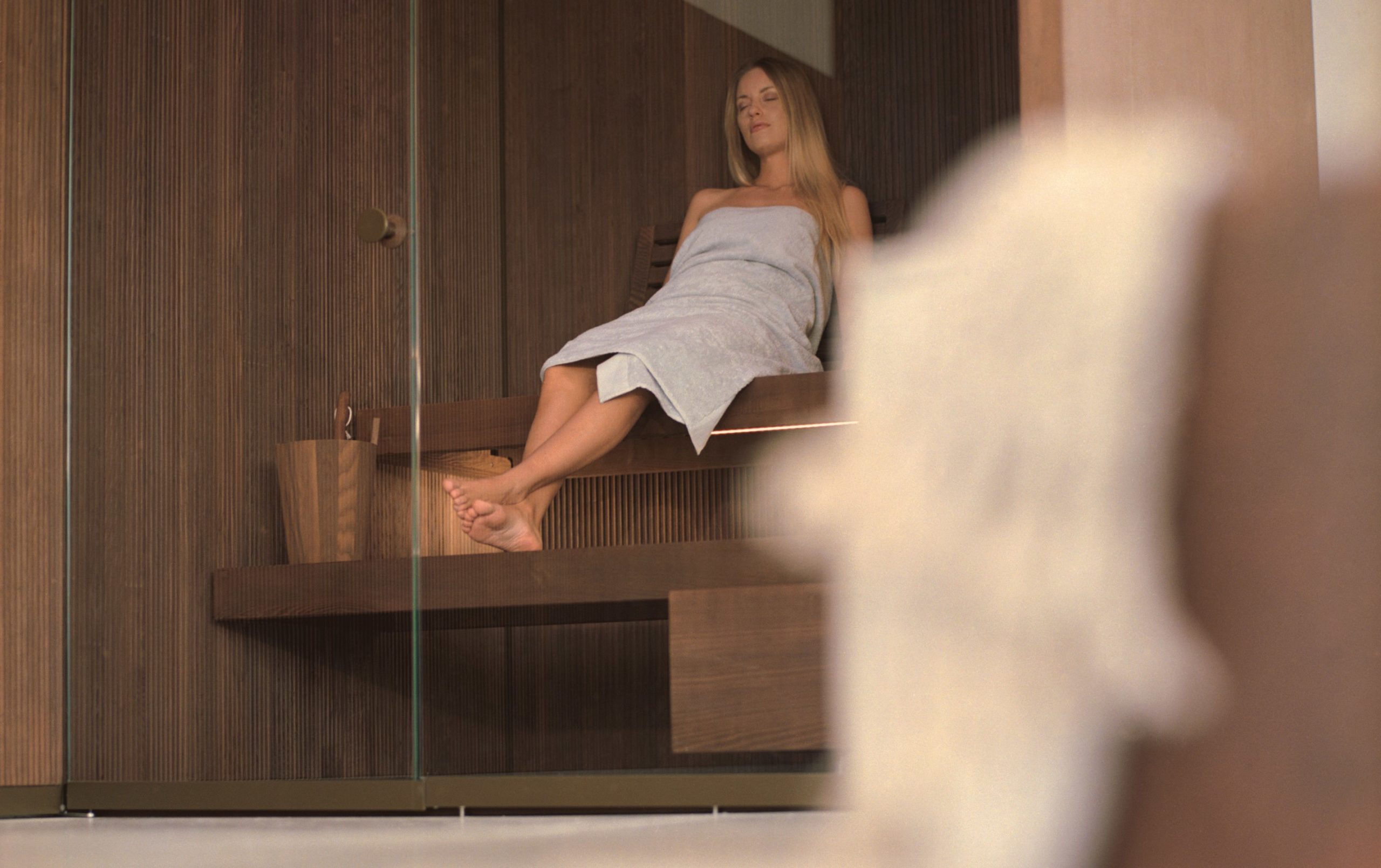
The benefits of a sauna come from using it regularly, and that’s far easier when it’s part of your home.
Yours is ready when you are. Switch it on from your phone on the way home, step in after a run or wind down for ten minutes before bed. You choose the temperature, the lighting and how long you stay.
It’s your space, kept just how you like it. Whether it’s in your en-suite, beside your home gym or at the bottom of the garden, it’s always a few steps away whenever you want it.
The heat asks very little of you. There’s nothing to scroll and nothing to answer, just the hiss of water on hot stones.
It’s one of the few places left where switching off happens almost on its own.
After a long run, a weekend in the garden or a hard match, deep dry heat helps stiff muscles loosen.
Many people find they feel less sore the next day.
In a sauna, your heart beats faster and your blood vessels open up, much as they do during light exercise.
Researchers in Finland have followed regular sauna users for decades and have linked frequent sessions with a healthier heart.
As your body cools after an evening session, your temperature drops, which is one of the natural signals that it’s time to sleep.
Regular sauna users often say they sleep more soundly.
A proper sweat leaves your skin warm and flushed with colour. A cool shower afterwards finishes the session and leaves you feeling fresh.
Need some downtime? A sauna is the ideal means of taking some time to yourself.
Saunas were made for company. Most home designs seat two or more, so an evening sauna can be time with your partner, away from phones and to-do lists.
Built into your bathroom or en-suite, a sauna sits a few steps from the shower, so cooling off between rounds is easy.
Natural wood and a toughened glass front keep it light and open, so it feels like part of the room. Many designs stand on your existing floor, which keeps building work to a minimum.
A corner sauna makes the most of a space that’s often overlooked, in a large bathroom, a bedroom suite or a home gym.
With glass on the front, the side and even the ceiling, it keeps the room bright and the views open. Choose Canadian hemlock for a pale, even finish, or heat-treated aspen for warmer honey tones.
The first saunas were separate cabins, built out in nature.
Effe’s Cabanon collection, named after Le Corbusier’s famous cabin, brings that idea to your garden or terrace.
Its corrugated aluminium exterior comes in soft, matte colours that settle quietly into the landscape, while heat-treated wood inside gives you the warmth of a traditional sauna. Add a deck and you have somewhere to sit out and cool off between rounds, even on a frosty morning.
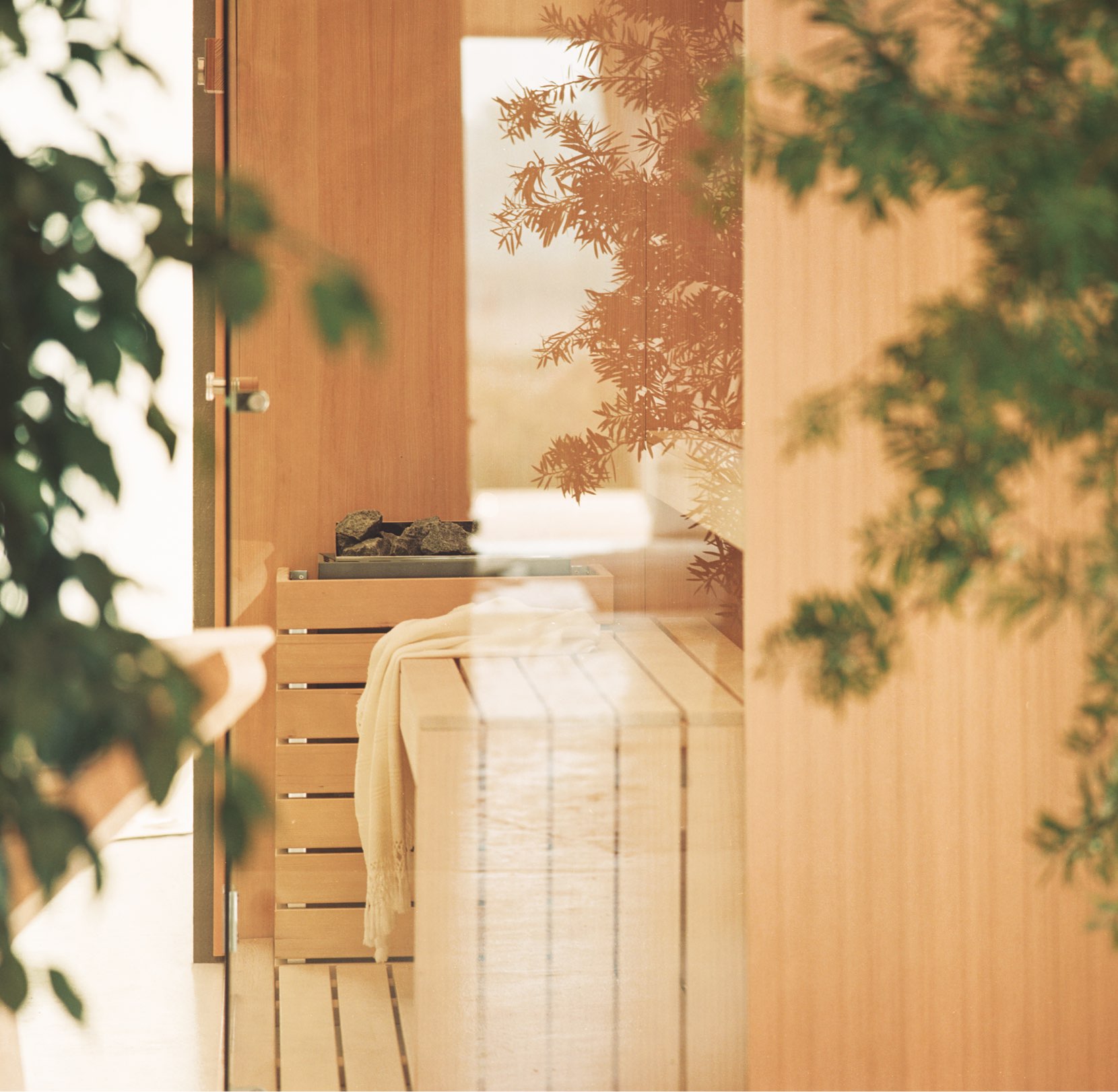
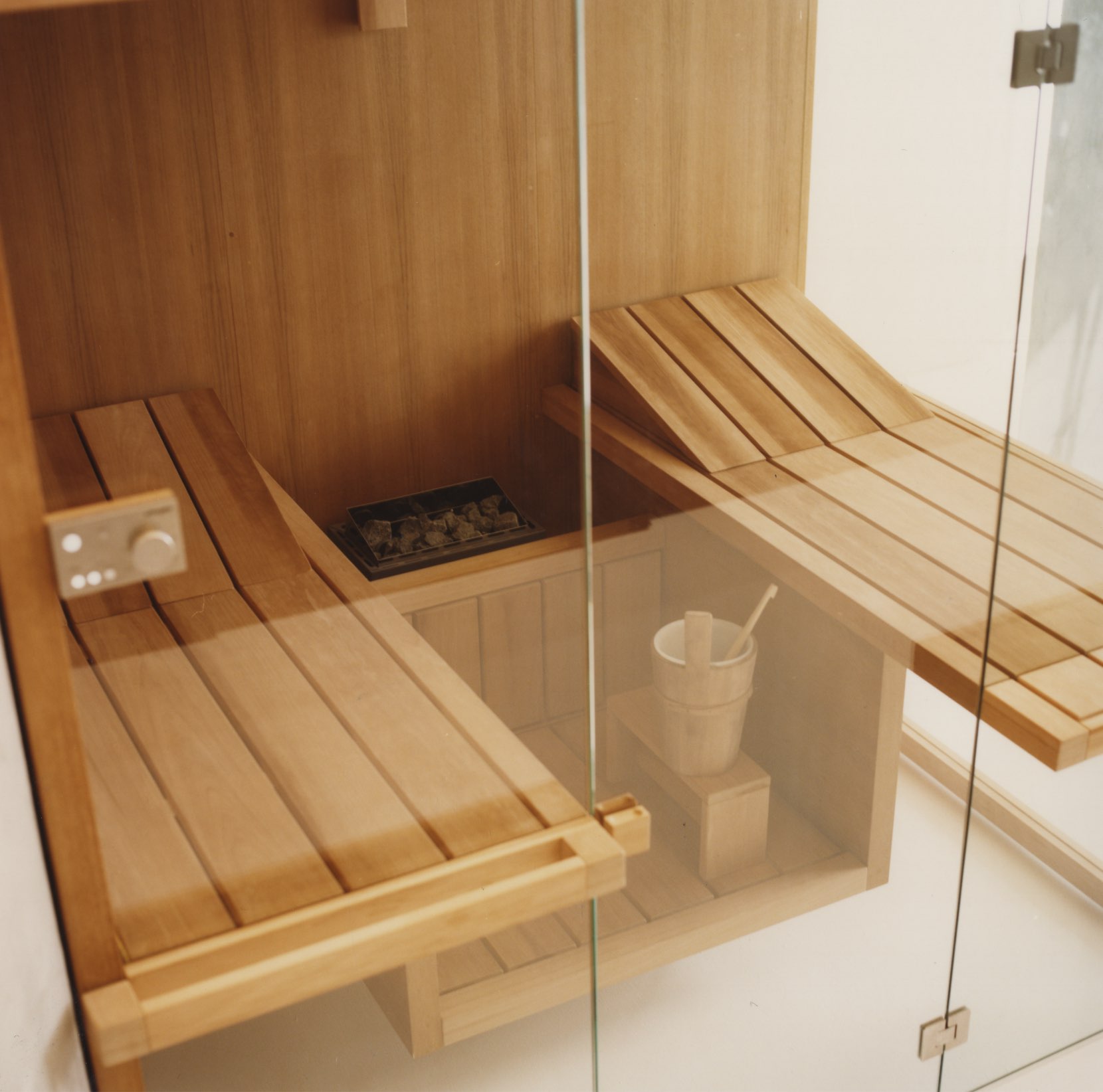
Effe is the Italian sauna and steam specialist whose designs we build around.
Here’s what sets their saunas apart.
Canadian hemlock and heat-treated aspen stay pleasant to sit on at high temperatures and age beautifully.
Walnut, oak and wenge are options on selected designs.
Effe uses toughened glass on the fronts and doors, and on some models the ceiling too, so light flows in and the sauna feels open.
Low-emission glass reflects the heat back inside, so it stays in the sauna and doesn’t escape into your bathroom.
Traditional stone heaters give you the classic sauna experience. The stones hold their heat, so water poured over them turns to steam straight away.
The heater sits behind a protective guard, and on some designs it’s hidden inside the bench.
Switch the sauna on from your phone with the Effe app on your way home, and set the temperature and lighting before you arrive.
LED lighting beneath the benches gives a soft glow. Colour therapy lets you change the mood from bright and energising to low and restful.
Dry heat at up to 100°C puts unusual demands on a room. We work through each of these points before anything is built.
On the surface, a sauna looks simple: wood, glass and a heater. What makes one a pleasure to use is a set of decisions that depend on each other, and getting them right takes experience.
Where should it go? The right spot depends on how you’ll use it, how the room flows and where the shower, windows and doorways sit. A sauna in the right place feels like it was always meant to be there.
Which wood suits the heat? Not every wood copes with temperatures close to 100°C. The right choice stays comfortable to sit on, keeps its shape for years and suits the finishes around it.
Where does the heater sit? Its position decides how the heat moves, where the warmest seat is and how comfortably you move around the sauna. Its power has to match the size of the room, so it warms up quickly and holds the temperature steadily.
How will the air move? Well-placed ventilation keeps the air fresh and comfortable, however long you stay.
What about power? A sauna heater needs its own electrical supply, which is far easier to plan at the design stage than to add later.
Change one of these and the others often need to change with it. That’s why a sauna works best when it’s designed as part of the whole room, by specialists who understand heat, joinery and how a home is lived in, right from the very first drawing.
If you’ve been imagining a private sauna, a consultation at our Long Ditton showroom is the natural first step.
Less than most people expect. A compact corner sauna for two can fit in a space of around 1.7m by 1.3m, with a little over 2m of ceiling height.
Larger saunas with room to lie down need more space, and the right size depends on how many people will use it and how you like to relax.
Very little. Sit on a towel to keep the benches clean, and leave the door slightly open after each session so the wood can dry naturally.
Every so often, wipe the benches down with a damp cloth and give any marks a light sand. Once a year or so, check the heater stones and replace any that have cracked, so the heat and steam stay at their best.
The wood inside is left untreated, so it never needs varnishing or painting.
Usually around £1 to £2 a session, depending on the size of the sauna, the power of the heater and how long you stay in.
Most of the energy goes into warming the sauna up. Once it’s at temperature, the heater only works gently to hold it there, which is why the right-sized heater makes a real difference.